
"profit control"
1000 article(s) found
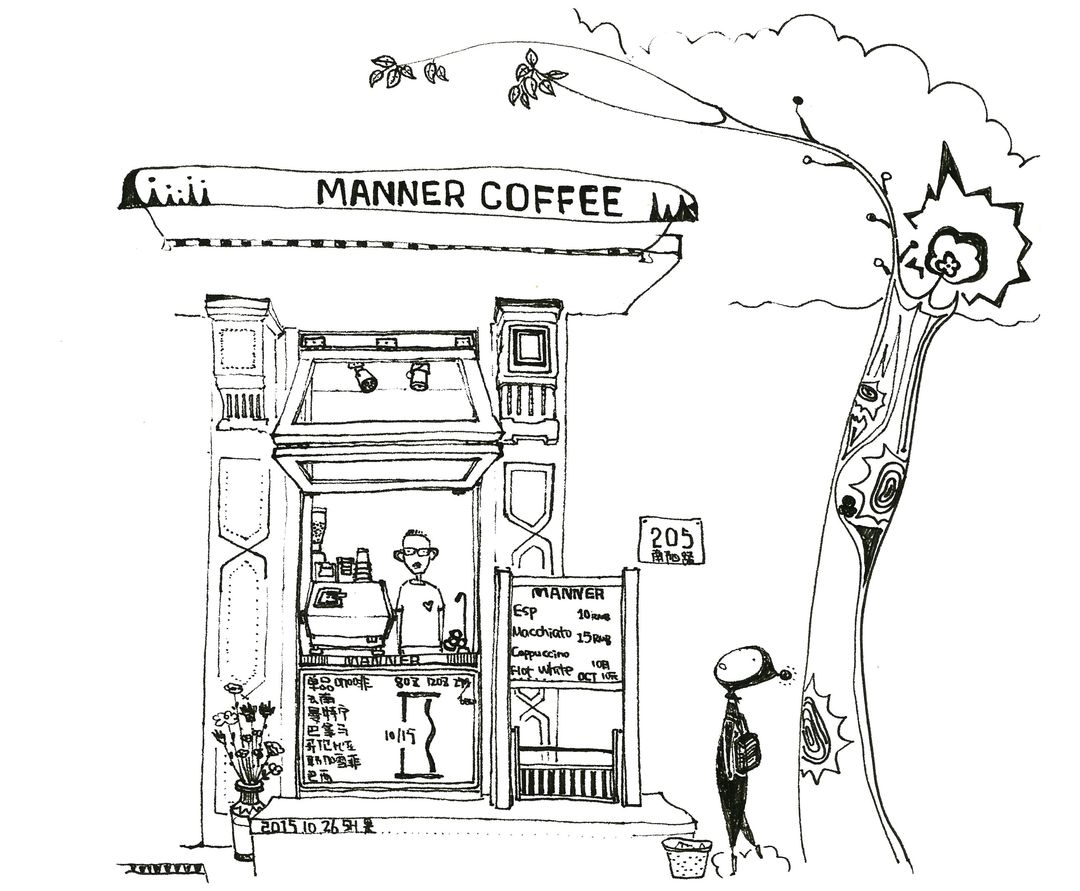
The latest coffee news Shanghai Nanyang Road now 2 square meters boutique coffee shop hopes to promote the window store model
Shanghai Nanyang Road is only a few hundred meters long, surrounded by two large office buildings Henglong Plaza (special reading) (related practical information) and Donghai SOHO (special reading), but there are nearly 10 independent boutique coffee shops on this road, one of which is only 2 square meters, called MannerCaf. Around two or three o'clock in the afternoon, this window-style take-away coffee shop often lines up, except for the door.

Keurig Green Mountain capsule Coffee Machine how to use domestic capsule Coffee Machine which is good
Professional coffee knowledge exchange more information about coffee beans Please follow the coffee workshop (Wechat official account cafe_style) Keurig was originally a small coffee shop in the United States that sells fine coffee. It has grown into the third largest beverage group in the United States by capturing consumer tastes, opening up models, and bringing in external capital. Let's take a look at its successful way to turn a shrimp into a big whale.

Coffee bean trading mode there are several coffee bean auction trading modes are fair and fair?
Professional coffee knowledge exchange more coffee bean information Please follow the coffee workshop (Wechat official account cafe_style) Import and export model exporters may be independent producers, farmers' cooperatives, or third-party exporters. They trade with importers and sell them directly to bean bakers, but importers have the connections and capital to buy a large number of beans, so baked beans

News flash: boutique coffee is only 9.9 yuan. Is it "messing up" or "breaking it"?
Since entering the Chinese market, as a refreshing functional drink, the price of boutique coffee has reached a world wide. But things seem to be changing. Three years ago, Seesaw, founded in Shanghai, brought down the price of boutique coffee to 25 yuan, which caused controversy in the industry. now, as a troublemaker, NeverCoffee in Beijing has reduced the price of its boutique coffee to 9.9 yuan.

Top 10 problems you will encounter in the operation of coffee shops
Question 1: How to increase coffee shop turnover? Passenger flow and per capita consumption of guests directly determine the level of turnover, so in order to improve turnover, we need to start from two aspects: increasing passenger flow and per capita consumption of guests, strengthening training service personnel sales skills and establishing reward mechanism. [Question 2] Coffee shop marketing activities have been going on, but found that the effect is not good,

NaiXue tea announced IPO market value of more than 30 billion NaiXue tea can become the world's first tea
This morning, the new tea drink NaiXue tea because of the public offering topic rushed to the micro bo list. The topic has generated 85.467 million views and 3377 discussions. It is understood that Naixue tea completed the listing process as scheduled in mid-June, and the approach to listing means that Naixue tea is only one step away from the first global tea drink. On the evening of June 17, Naixue's tea was in Hong Kong.

Unmanned Cafe received a lot of financing, and we talked to its founder.
When it comes to coffee and the Internet, you may immediately think of start-up coffee such as 3W and garage. It's more than that. There is also a non-occupied category of coffee vending machines that also use the Internet to make coffee. Over the past two years, Internet brands such as Zero Bar and Coffee Wharf have repeatedly received financing and outperformed themselves in the coffee industry. Why does the capital not like the 70 billion coffee market, but it is green?

Why don't the capital bosses of 70 billion yuan coffee market like it?
According to statistics, the scale of China's coffee consumption market reached 70 billion yuan in 2015, and it is breaking out at an annual growth rate of 15%, reaching trillion yuan by 2025. With a market size of 70 billion yuan and a market growth rate of 15%, why is capital dismissive of such a thriving industry? Why does the capital despise the coffee industry? the development of the industry is distorted and deviates from the commercial track.

When the "small and beautiful" boutique coffee faces the mass market, will it be desperate?
According to incomplete statistics, there are more than 20, 000 coffee shops in China, mainly in first-tier, second-and third-tier cities. Among them, Starbucks alone has opened more than 2600 stores in more than 120 cities, and many small and beautiful independent boutique coffee shops are gradually gaining consumers in the wave of consumption upgrading.

Sri Lanka to create the world's cleanest tea Sri Lanka black tea three brands expensive
Sri Lanka government officials have issued a controversial decree essentially cutting off the supply of fertilizers, herbicides and pesticides in an effort to keep local tea intact and profitable. The project is wide-ranging and addresses soil depletion, aging livestock, labour issues, domestic consumption and exports. due to

Introduction to the variety treatment method of grinding scale of Maraka Dula coffee beans in Nicaragua
The Cup of Excellence is the most esteemed award given out for specialty coffees. These awards come from a strict competition that selects the very best... Cup of Excellence Competition, evaluated by the Coffee Competition, an American non-profit organization

High-quality coffee, coffee culture and coffee trade
Some people say that the world's coffee culture and coffee trade grew up on the world's aborigines and supported by indigenous people, while returning to the new Taiwan coffee, which is located in the coffee producing area of the original tribes, German coffee in Santimen Township, Pingtung, in just a few years, it has rushed into the market at a subtle speed, but it has also brought hidden worries. The harvest of Devon coffee beans is over, Tim.

Internet + Coffee is sold in a car. Wheelys Coffee says that he is actually a technology company.
The sales volume of China's coffee market reached 70 billion yuan in 2015, is expected to reach 300 billion in 2020, and is expected to exceed 1 trillion in 2025. According to the London International Coffee Organization, China's coffee market is growing at an annual rate of 15%, while the global market is growing at an average rate of 2%. European and American countries consume about 500 cups of coffee per person per year, while the figure in China is only 4. China's coffee market

Colombian coffee beans plan to break away from the international futures price system because the pricing of commercial coffee is unreasonable
Professional coffee knowledge exchange more coffee bean information please follow the coffee workshop (Wechat official account cafe_style) Columbia Coffee is world-famous, but this does not mean that these South American countries will be relatively well paid. In reality, the price of coffee is regulated by the New York Stock Exchange. In response, Colombian producers believe that this is making the coffee industry whole.

You're been had! Expose 8 popular lies about catering entrepreneurship (recommended by doctoral scholars)
For the exchange of professional baristas, please follow Dr. Coffee Workshop (official Wechat account cafe_style). I live in a 985 university, a snack bar next to it, and on average, the sign shows up in less than half a year. The storefront has been demolished and decorated all the year round. Look at the migrant workers who have worked hard to save some savings to open a shop and lose everything, but the landlord earns rent steadily. we
Rwanda Pearl Project| How to drink coffee beans in Rwanda and the development history of its coffee industry
Rwanda Pearl Project| Rwanda's weight in the traditional coffee world is not as good as Kenya and Ethiopia, but in recent years its growing reputation has attracted the attention of international boutique coffee. Rwanda's coffee industry has a story, which is inseparable from government support. Rwandans have been living in Rwanda

Coffee shop management 10 questions? How to increase the turnover of coffee shop
1. How to increase the turnover of the coffee shop? The volume of passengers and the per capita consumption of guests directly determine the level of turnover, so it is necessary to increase the turnover from two aspects: increasing the flow of customers in the coffee shop and increasing the per capita consumption of guests, strengthen the training of service personnel sales skills and establish an incentive mechanism. two。 The coffee shop marketing campaign has been going on, but it has not been very effective. How to enter it?

Boutique coffee Rwanda coffee origin Rwanda coffee practice
Rwandans have been growing coffee since colonial times, but until 1999, its products were still classified as below Class C and were not popular in the global market. The reason for the poor quality is that farmers do not have a fixed procedure for washing coffee beans and do not process coffee fruits according to specifications in time. Buyers buy coffee beans at $0.33 per kilogram, and farmers keep warm by the meagre profits earned at low prices.

How did seesaw enter the coffee market? Seesaw brand introduction?
Professional coffee knowledge exchange more coffee bean information Please pay attention to the coffee workshop (Wechat official account cafe_style) boutique coffee finally no longer feels untouchable the future market share is also slowly expanding according to incomplete statistics, there are now more than 20,000 coffee shops across the country, mainly located in first -, second and third-tier cities. Starbucks alone has opened in more than 120 cities.

Fine coffee Rwanda coffee manor Rwanda coffee producing area
Rwandans have been growing coffee since colonial times, but until 1999, its products were still classified as below Class C and were not popular in the global market. The reason for the poor quality is that farmers do not have a fixed procedure for washing coffee beans and do not process coffee fruits according to specifications in time. Buyers buy coffee beans at $0.33 per kilogram, and farmers keep warm by the meagre profits earned at low prices.